
Light-cured resin
Resin printing with the detail in mind.
Fine features are one part of the decision. Your chosen resin, visible surfaces and internal spaces need to be considered together.
Where resin can be worth discussing
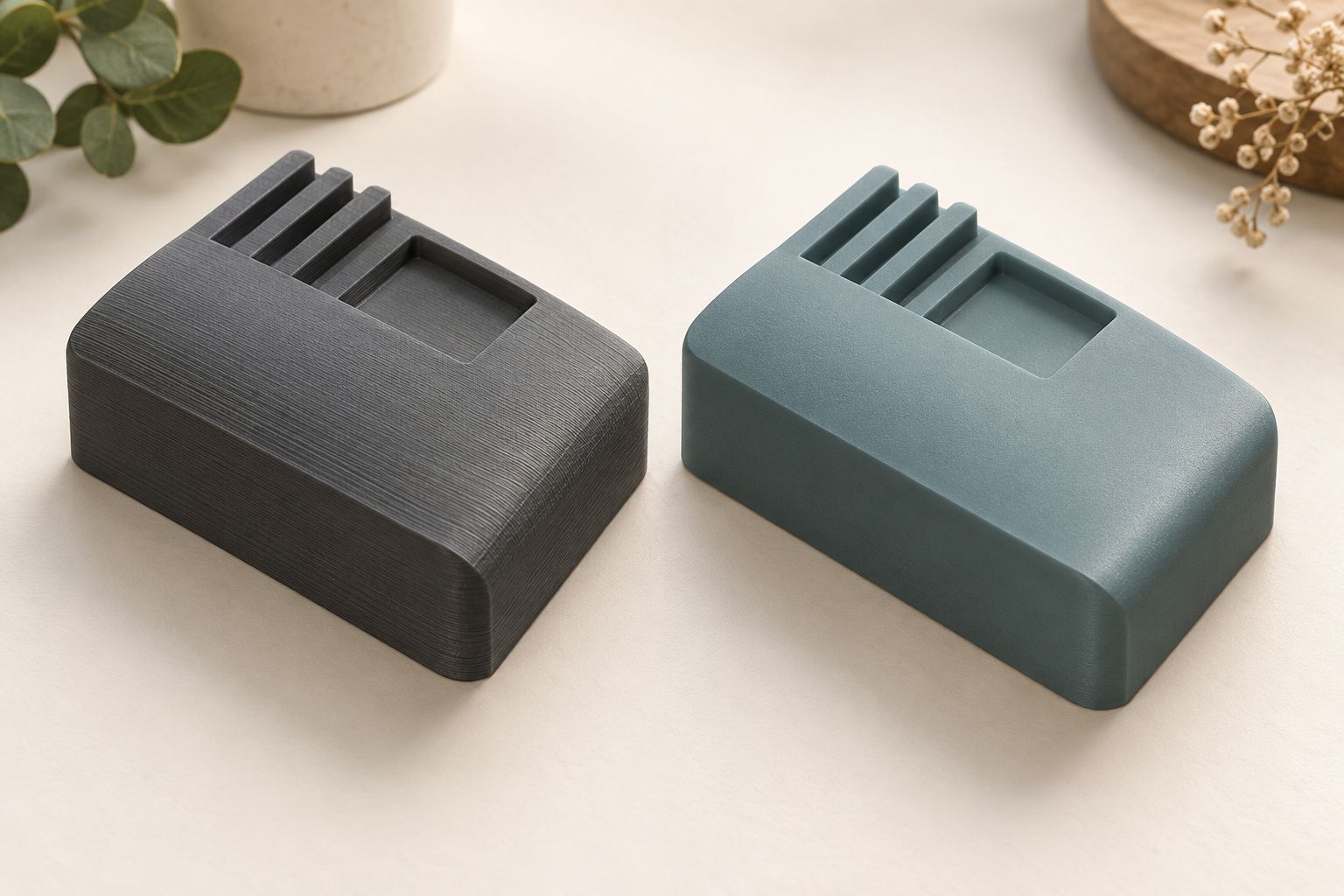
Resin printing forms layers from liquid photopolymer using light. It can be considered for presentation objects and fine features, but a process name is not a finish or suitability guarantee. Formlabs’ FDM/SLA comparison gives general process context, not a claim that we operate a particular manufacturer’s machines.
Resin is available alongside FDM and large-format FDM within our 20+ printer fleet. Printing operates seven days a week. We supply orders by delivery only, with no collection or visits.
Detail is only part of the brief
- Mark the face that will be presented, the smallest features and any surface where support contact is unacceptable.
- Identify cavities and say whether openings or wall geometry may change.
- Describe handling, heat, light exposure and any mechanical requirements.
- Explain whether further finishing is essential, optional or outside the job.
Support removal can leave raised marks or divots, as Formlabs’ support-mark guidance explains. Agree the important face and finishing scope rather than treating an illustrative smooth surface as an output specification.
A hollow shape still needs access
For a hollow resin model, drainage, venting and washing access need planning for the actual geometry and orientation. The Formlabs hollowing guide describes those concerns for its system. Its dimensions and settings are not blanket rules for our fleet.
The hypothetical hollow-form study below makes the questions concrete. Its illustrated openings are not a drainage recipe and have not been validated.
Confirm a grade and processing route
“Resin” does not identify the complete material specification. Discuss the intended use and a particular available grade; washing and any required post-curing follow that material and system. See Formlabs finishing guidance for general context, not instructions to process a print at home.
Use the instant form only if its current options describe your requirement accurately. Otherwise send a manual resin enquiry with the actual model, dimensions, quantity and marked priority faces. For changes to the geometry, use file and model advice.
Hypothetical design study / fictional brief
A hollow display form
An independently invented teaching example. No customer project is depicted, and this concept has not been printed, measured or validated as part of this study.
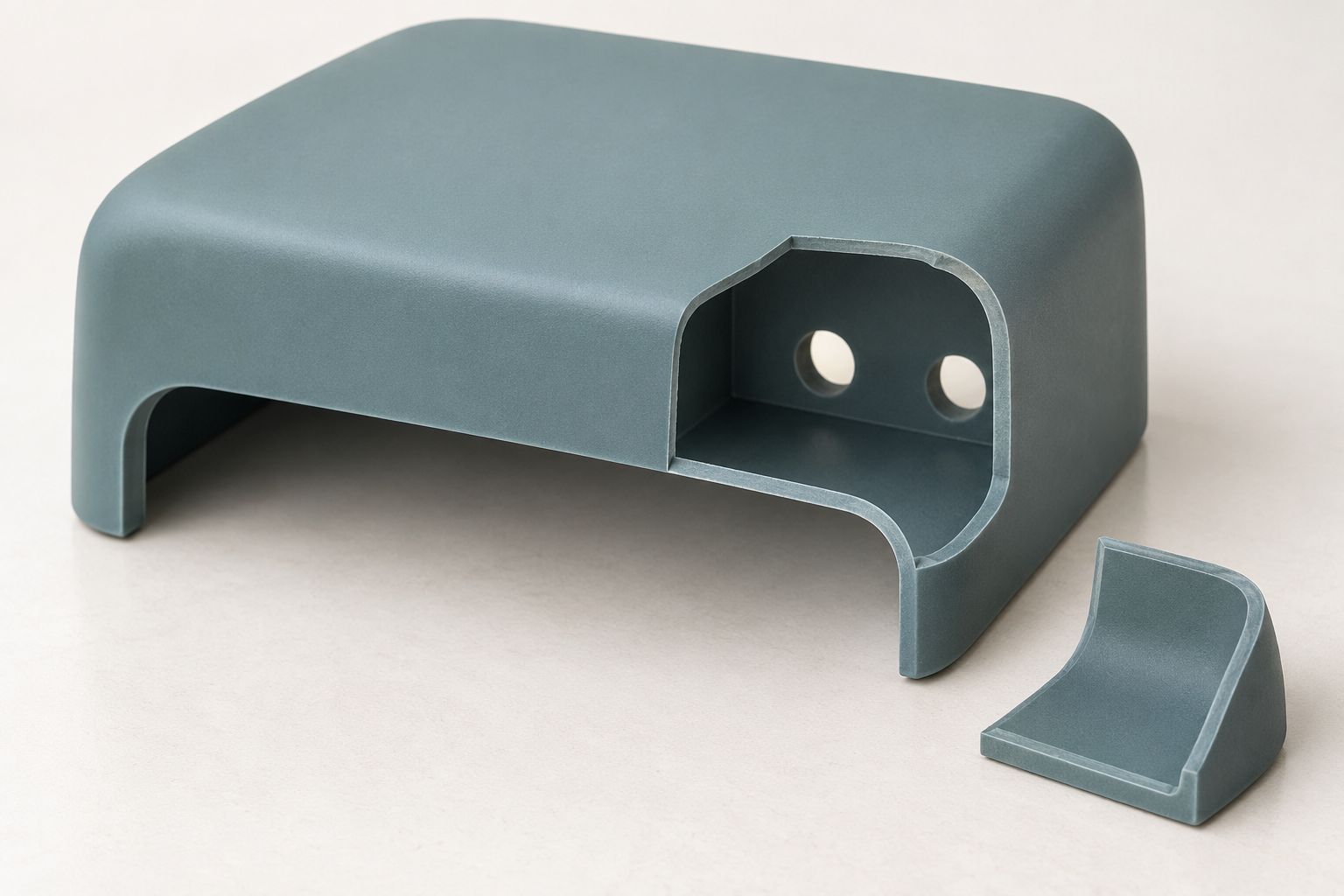
- Explanatory cutaway. An artistic teaching view, not the final exterior or a sectioned test print.
- Open underside. Discuss support-removal and cleaning access. Dimensions and orientation are undecided.
- Rear openings. Conceptual access features, not a rule for the number, position or size of resin drains.
The fictional brief
Assume one indoor display object, roughly 100 × 80 × 60 mm. The original rounded form has an open underside and a cavity. An artistic cutaway reveals the cavity, with two circular rear openings as access features for discussion. No loads, electronics, sealing or validated wall dimensions are assumed.
The decision
Can the internal space remain accessible for the chosen process? Decide the opening location, orientation and allowable changes together. A hollow outline is not a complete preparation plan.
One route with an open FDM shell
Keep the underside open and discuss access to any required supports. That may move support contact, layer texture or a seam onto another face. Splitting the shape introduces an assembly decision rather than a free shortcut. Prusa support guidance
Another route with hollow resin
Drainage, venting and washing access would need designing for the orientation and chosen system. The illustrated holes are not a validated drain plan. Trapped material and suction need considering alongside wall geometry and finishing access. Formlabs hollowing guidance
Removing internal volume does not establish a price saving or suitability. Preparation and finishing remain part of the actual quotation.
Before manufacture
Confirm the whole model, wall geometry, orientation, support and cleaning access, material, handling, and whether openings or joints may change. An enclosure with heat, loads or sealing requirements needs a different brief and appropriate verification.
What to send
Include a section view, overall dimensions and a list of features that may change. Mark openings and important exterior faces, and say whether it must remain one piece. Read resin geometry preparation for the next questions.
Use instant quoting for the available choices, a manual enquiry for unlisted requirements or model advice before quoting geometry that needs changes.
Have a question about your project?
[email protected]